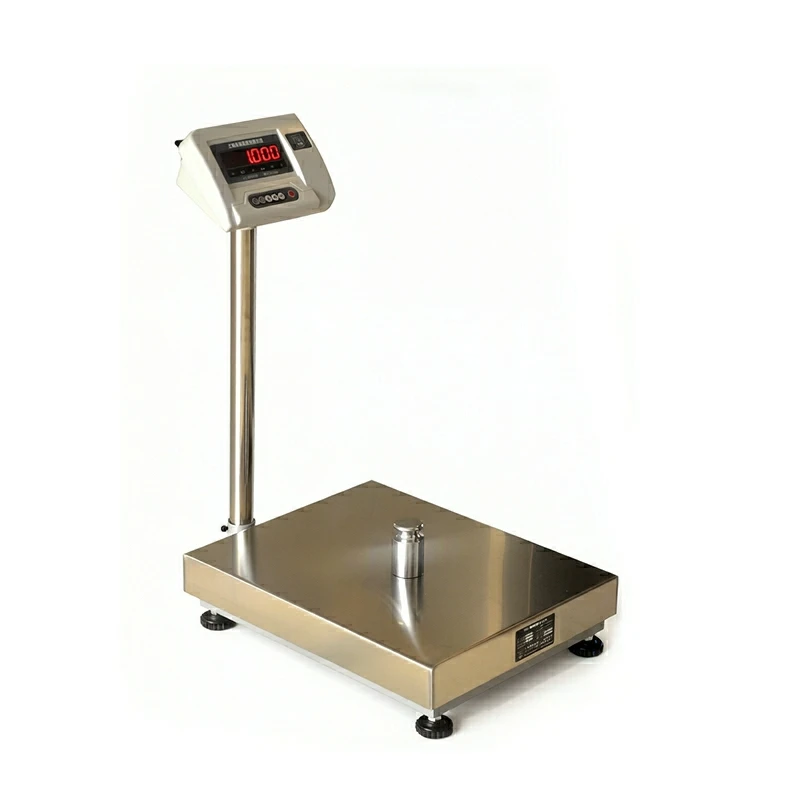
Daily Cleaning
The weighing pan, sensors, and casing of the electronic scale need to be cleaned regularly to prevent the accumulation of dust, oil, or corrosive substances. Use a soft, dry or slightly damp cloth for cleaning. Avoid using chemical solvents (such as alcohol or gasoline) or hard brushes to prevent damage to the sensors or casing coating. For electronic scales used in the food industry, ensure there are no residues after cleaning to avoid cross-contamination.
Regular Calibration
The accuracy of an electronic scale depends on regular calibration. The calibration frequency needs to be determined based on usage frequency and environmental conditions: For high-frequency use (e.g., more than 8 hours per day) or harsh environments (e.g., high temperature, humidity, vibration), monthly calibration is recommended; for low-frequency use or stable environments, quarterly calibration is sufficient. Calibration requires the use of standard weights (with higher accuracy than the scale being calibrated), following the instructions in the manual, or can be performed by a professional organization. Record the data after calibration for traceability.
Environmental Management
Electronic scales are sensitive to the environment and extreme conditions should be avoided: Regarding temperature, most electronic scales are suitable for temperatures ranging from -10℃ to 40℃. Exceeding this range may cause sensor drift or abnormal display. Regarding humidity, excessively high humidity (e.g., exceeding 85%) may cause short circuits, while excessively low humidity (e.g., below 30%) may generate static electricity. These conditions require adjustment using a dehumidifier or humidifier. Regarding vibration, prolonged exposure to vibrating environments (e.g., near a stamping machine) will accelerate sensor fatigue. This requires isolation using shock-absorbing pads or an independent foundation. Regarding corrosive gases, acidic or alkaline gases in chemical and pharmaceutical environments may corrode the casing and circuitry. Therefore, corrosion-resistant electronic scales should be selected, or ventilation should be improved.